
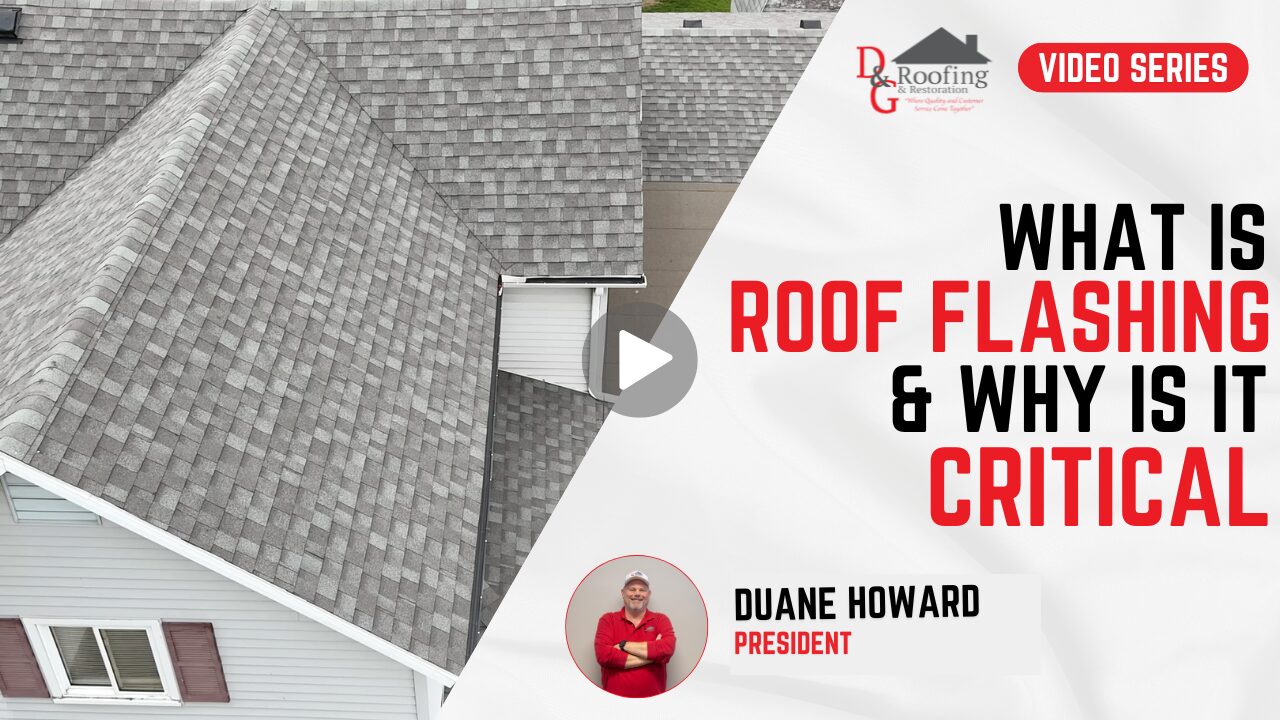
Roof flashing is one of the most important parts of your roofing system because it helps direct water away from vulnerable areas where shingles alone cannot fully protect your home.
When most homeowners look at a roof, they usually notice the shingles first. That makes sense because shingles cover most of the visible surface. However, your roof is not protected by shingles alone. A properly installed roof also depends on underlayment, ventilation, trim metals, and roof flashing working together as one complete system.
As a roofing contractor, I can tell you that flashing is one of those details homeowners do not always think about until there is a leak. Unfortunately, if flashing is missing, damaged, or installed the wrong way, even a brand-new roof can allow water into your home.
What Is Roof Flashing?
Roof flashing is usually made from metal and is installed in areas where water needs extra help being directed away from the home. These areas are often where the roof meets another surface, changes direction, or has an opening through it.
Shingles are designed to shed water down the roof, but they are not enough on their own at every transition. Anywhere water can collect, slow down, or run against a wall or penetration, flashing becomes critical.
You will often find roof flashing around:
- Chimneys
- Skylights
- Roof valleys
- Wall intersections
- Dormers
- Plumbing vents
- Eaves and roof edges
- Areas where rooflines meet siding or brick
If you are already dealing with water stains or moisture issues, D&G Roofing and Restoration has a helpful page about a leaking roof and common causes of roof leaks.
Why Roof Flashing Helps Prevent Leaks
Roof flashing helps prevent leaks by guiding water away from places where it could otherwise sneak underneath shingles or behind exterior walls. Without proper flashing, water can find gaps, seams, nail holes, and weak points in the roof system.
This is especially important because shingles are not waterproof by themselves. They are water resistant and designed to work with the other components of the roof. If the flashing is wrong, water may eventually find a path into the attic, walls, soffits, or ceilings.
Common types of roof flashing
- Step flashing: Used where the roof meets a vertical wall, often installed in layers with the shingles.
- Counter flashing: Often used with step flashing to cover and protect the upper edge of the flashing system.
- Headwall flashing: Installed where a roof slopes into a wall.
- Drip edge or perimeter metal: Installed along roof edges to help control runoff and protect the roof perimeter.
- Valley flashing: Used where two roof planes meet and large amounts of water flow downward.
- Vent flashing: Installed around pipes and roof penetrations.
The National Roofing Contractors Association explains that flashing helps prevent water entry at roof junctions, walls, skylights, chimneys, vents, and other penetrations.
Why Shingles Alone Cannot Replace Roof Flashing
A common misconception is that if the shingles look good, the roof must be protected. That is not always true. You can have straight, clean, brand-new shingles and still have major leaks if the roof flashing is not installed correctly.
Shingles handle the main surface of the roof. Flashing handles the tricky areas. These are the spots where water changes direction, moves around obstacles, or has a chance to get behind building materials.
That is why proper roof installation matters so much. D&G Roofing and Restoration explains more about the full process in its guide to the typical roof installation process in Dayton, Ohio.
Signs Your Roof Flashing May Be a Problem
Flashing issues are not always obvious from the ground. Sometimes the first sign is a ceiling stain, a leak during heavy rain, or moisture in the attic. Other times, you may notice visible damage around chimneys, walls, or roof edges.
Warning signs to watch for
- Water stains on ceilings or walls
- Leaks near chimneys or skylights
- Moisture in the attic
- Loose or lifted metal around roof transitions
- Rust or corrosion on flashing
- Missing sealant or cracked caulking
- Rot near soffits, fascia, or wall intersections
- Leaks that happen during wind-driven rain
GAF also notes that proper step and counter flashing is critical at roof-to-sidewall transitions and that a roof may leak if flashing is not installed properly. You can learn more from this GAF technical bulletin on proper flashing.
Why Professional Roof Flashing Installation Matters
Roof flashing is not just about placing metal on the roof. It has to be layered correctly with the shingles, underlayment, siding, trim, and roof penetrations. Water should always be directed down and away from the home, not trapped behind materials.
Improper flashing can lead to:
- Roof leaks
- Wood rot
- Attic moisture
- Mold concerns
- Damaged insulation
- Interior drywall damage
- Premature roof repairs
That is why flashing should be inspected carefully during roof repair, roof replacement, and storm damage evaluations. A good contractor will look beyond the shingles and check the full roofing system.
Final Thoughts on Roof Flashing
Roof flashing may not be the most visible part of your roof, but it is one of the most critical. It protects the areas where water is most likely to enter your home and helps your roofing system function the way it was designed to.
If your roof has leaks, water stains, chimney issues, or concerns around roof transitions, do not assume the shingles are the only thing that matters. Flashing could be the real problem.
To learn more or schedule a professional roofing consultation, visit the D&G Roofing and Restoration website or contact D&G Roofing and Restoration today for a project consultation.